



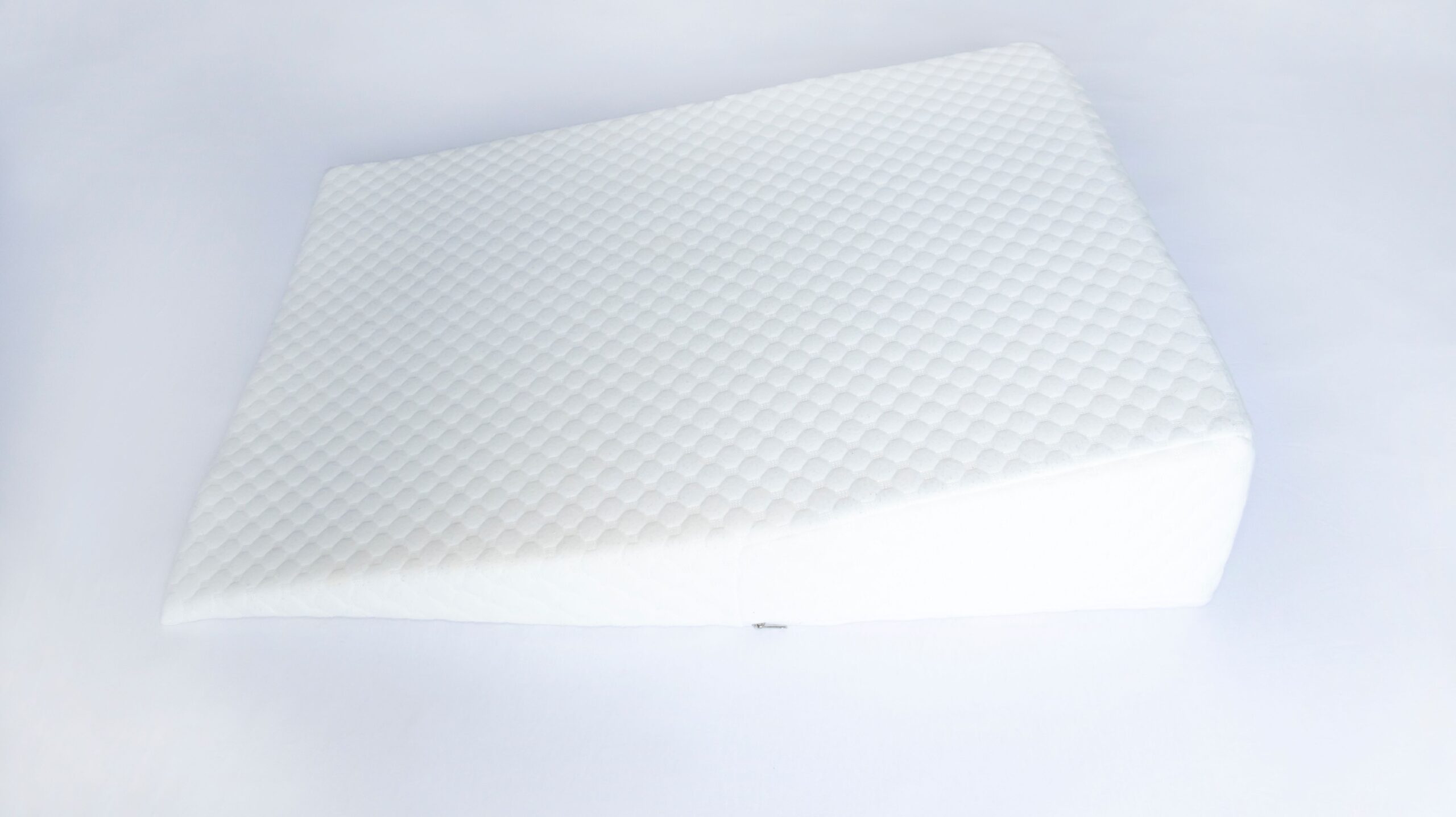
Discover how sleeping on your back with a wedge pillow and knee support can reduce snoring, shoulder pain, and lower back pain for better rest.
Why Sleep Position Matters
A good night’s sleep is essential for maintaining your health, mood, and energy. However, issues like snoring, shoulder discomfort, and lower back pain (LBP) can make restful sleep difficult to achieve. If you’ve been searching for an easy, non-invasive solution, using a wedge pillow to sleep on your back—with a second pillow under your knees—might be exactly what you need.
What Is a Wedge Pillow?
A wedge pillow is a firm, triangular-shaped cushion designed to elevate your upper body or legs while you sleep. Typically made from memory foam or dense polyurethane, wedge pillows come in a variety of heights and angles to suit your needs. They’re commonly recommended for acid reflux or sleep apnea, but they can also be highly effective for reducing snoring and supporting healthy spinal alignment.
1. How a Wedge Pillow Reduces Snoring
Snoring happens when airflow through the airway is restricted, causing throat tissues to vibrate. Elevating your head and torso with a wedge pillow helps keep your airway open and reduces the likelihood of tissue collapse.
Sleeping at a gentle incline—usually between 30° and 45° or 10” to 12” high—uses gravity to improve airflow and reduce snoring intensity. Unlike stacking multiple pillows, a wedge pillow stays in place all night, maintaining consistent support and positioning.
2. Easing Shoulder Pain Through Better Alignment
Shoulder discomfort is often caused by side sleeping, poor posture, or repetitive strain. Sleeping on your back with a wedge pillow helps distribute body weight evenly, minimizing pressure on the shoulders and upper back.
The slight incline also encourages your arms to rest naturally at your sides rather than crossing over your chest—a position that can compress the shoulder joint. Over time, this improved alignment can reduce inflammation and stiffness, helping you wake up more comfortable and refreshed.
3. Reducing Lower Back Pain with a Pillow Under the Knees
Lower back pain is one of the most common causes of poor sleep. When you lie completely flat, the natural curve of your lumbar spine can exaggerate, increasing tension in your lower back.
Using a wedge pillow to slightly elevate your upper body and placing a small pillow or bolster under your knees helps neutralize your spinal alignment. This combination reduces the arch in your lower back, relieves pressure on the lumbar discs, and encourages the muscles to relax.
By improving posture and reducing strain, this setup can make a dramatic difference in both sleep quality and next-day comfort.
How to Choose the Best Wedge Pillow
When selecting a wedge pillow, consider the following:
• Angle: A 30°–45° or 10” to 12” high incline is ideal for snoring and back pain relief.
• Material: High-density memory foam offers consistent, adaptive support.
• Width: Choose a wider wedge for stability and comfort during movement.
• Pairing: Use a knee pillow or rolled towel to complement upper body elevation.
The Bottom Line
A wedge pillow for snoring and back pain is an affordable, easy-to-use tool that can transform your sleep quality. By promoting proper alignment, reducing airway obstruction, and minimizing shoulder and lumbar strain, it addresses several common sleep challenges at once.
If you’ve been struggling with snoring, shoulder tension, or persistent lower back discomfort, try combining a wedge pillow under your upper body with a supportive pillow beneath your knees. This simple change can help you breathe better, rest deeper, and wake up pain-free.